
Should I Block a Blackmailer or Keep Talking? A Blackmail Fixers Perspective
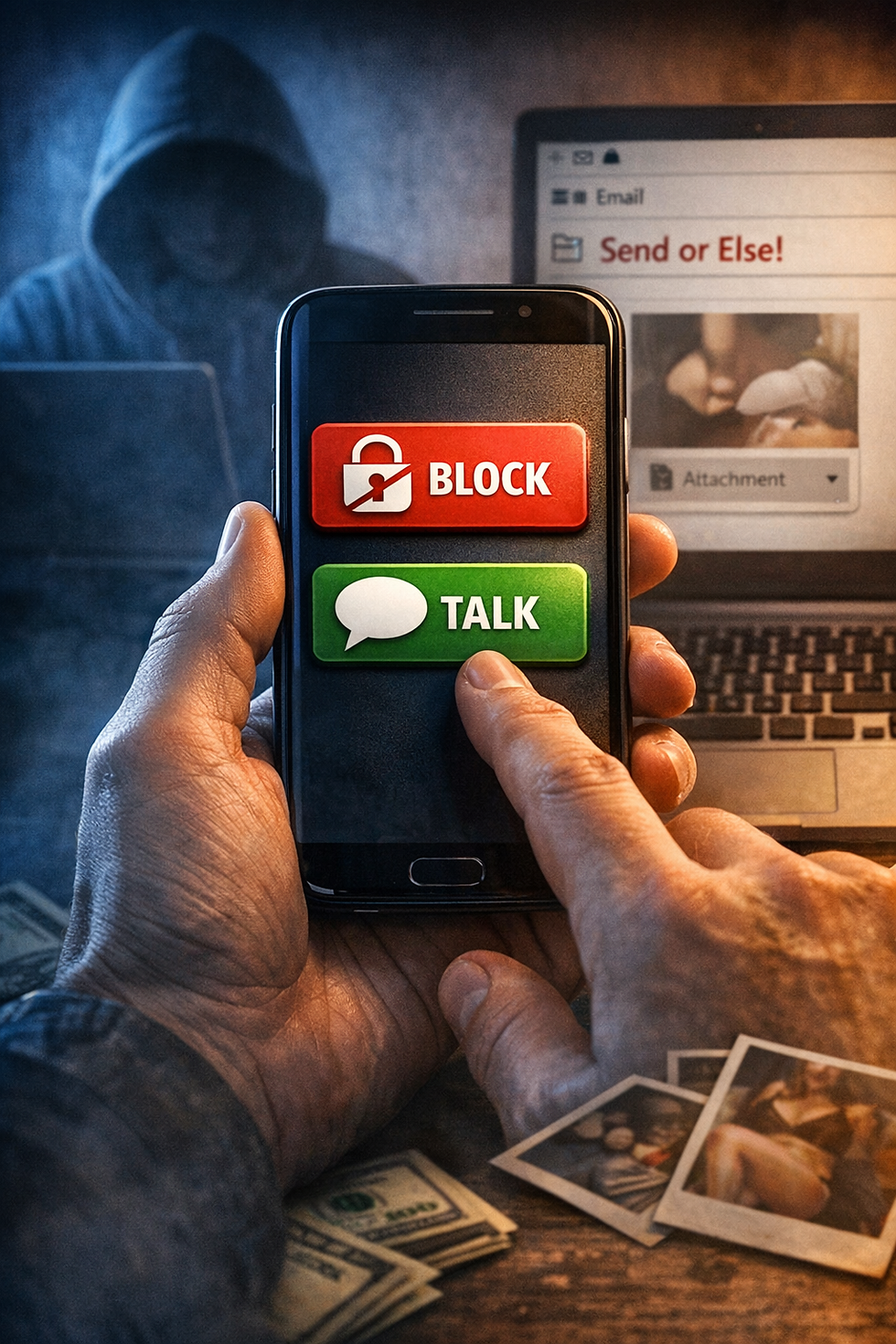
This is one of the most common—and most misunderstood—decisions people make in a blackmail situation.
The instinct is immediate:
Block them.
Cut it off.
End it.
It feels like control.
It feels like protection.
It feels like the right move.
Sometimes it is.
Sometimes it’s the exact move that escalates the situation.
The problem is not the action itself. The problem is making that decision without understanding what stage the situation is in and how the person on the other side is operating.
Why Blocking Feels Like the Right Move
Blocking gives the appearance of control.
You remove access.
You stop the messages.
You create distance between yourself and the threat.
Psychologically, it feels like you’ve taken power back.
But blackmail is not just about access.
It is about leverage.
And blocking does not remove leverage.
If the person already has:
images
videos
screenshots
contact lists
identifying information
Then blocking changes communication—but it does not change what they possess.
That distinction matters.
What Actually Happens When You Block
Blocking does not end the situation.
It changes the dynamic.
The outcome depends on the type of blackmail you are dealing with.
In high-volume sextortion cases, blocking often results in the blackmailer moving on quickly. These operations depend on speed and efficiency. If a target disappears and shows no signs of payment, the operator may shift to the next target.
However, there is a big "but" to this. If the blackmailer has already asked for money, in any capacity, and they have leverage (photos) then this is highly unlikely.
Blocking can trigger escalation.
If the blackmailer believes:
you are panicking
you were close to paying
you are trying to “escape” the situation
They may respond by increasing pressure through other means.
That can include:
contacting you on a different platform
messaging your contacts
increasing the aggressiveness of threats
Blocking is not a neutral action. It sends a signal.
The Risk of Continuing to Talk
If blocking can create problems, continuing to communicate can create even bigger ones.
Most people do not communicate strategically in these situations.
They react.
They send emotional messages.
They argue.
They plead.
They negotiate.
They try to explain.
They try to buy time without realizing how they are doing it.
Every message reveals something:
how afraid you are
how much you care about exposure
whether you might pay
whether you are uncertain
This is information.
And information is leverage.
The more you communicate without a strategy, the more leverage you give away.
Case Pattern: When Talking Made It Worse
A client engaged in back-and-forth communication for several hours.
At first, it was defensive. Then it became negotiation. Then it became frustration. Then it became panic.
Each shift revealed more.
The blackmailer adjusted accordingly. The tone changed. The demands changed. The pressure increased.
The situation did not escalate because of the original threat.
It escalated because the communication fed it.
Blackmailers and romance scammers are paying close attention to what you say and how you say it.
Case Pattern: When Blocking Triggered Escalation
In another case I had a few months ago, the individual blocked immediately after the first threat.
Within minutes, the blackmailer created a group message with two of the individual’s contacts from WhatsApp and sent partial content as a warning.
This was not a full release.
It was a demonstration.
The purpose was to re-establish control after losing direct communication.
Blocking did not cause the situation—but the timing of the block influenced what happened next.
The Middle Ground: Strategic Communication
The real answer is not “always block” or “always keep talking.”
It is understanding when communication has value—and when it becomes dangerous.
Strategic communication is not emotional. It is controlled.
It may be used to:
slow the pace of the situation
gather information
prevent immediate escalation
maintain a level of predictability
But it must be intentional.
Most people are not equipped to do this under pressure.
That is where situations begin to spiral.
The Timing Factor
Timing matters more than the action itself.
Blocking immediately after a threat is different from blocking after prolonged engagement.
Continuing communication in the first few minutes is different from continuing after payment or escalation.
There is no single rule because the situation evolves.
The key question is not:
“Should I block?”
The key question is:
“What happens next if I do?”
Platform Matters More Than People Realize
Different platforms behave differently.
Blocking someone on Instagram does not function the same way as blocking on WhatsApp or email.
On social media platforms:
blackmailers may still have access to your followers
they may create new accounts
they may attempt contact through mutual connections
On messaging apps:
blocking may cut off direct communication
but does not prevent them from using other channels
On email:
blocking may simply redirect messages to spam
without stopping attempts
The platform does not eliminate the threat.
It only changes how it is delivered.
The Most Common Mistake
People treat blocking as a solution.
It is not.
It is a tactic.
And like any tactic, it only works if it fits the situation.
The most common mistake is switching between:
blocking
unblocking
responding
ignoring
This inconsistency creates instability.
And instability is what blackmailers rely on.
When Blocking Is More Likely to Work
Blocking tends to be more effective when:
The situation is early.
There has been no payment.
There has been minimal engagement.
The behavior appears high-volume and scripted.
In these cases, the blackmailer is less invested.
Removing access reduces your value.
When Blocking Can Increase Risk
Blocking becomes riskier when:
There has already been extended communication.
Payment has been made.
The blackmailer has shown persistence.
There is a personal or targeted element.
In these cases, blocking can shift the method of pressure rather than ending it.
Where Professional Strategy Changes the Outcome
This is where most people run into a wall.
They are trying to make a tactical decision in a situation that requires a strategic approach.
Blocking is a tactic.
Talking is a tactic.
Neither is a strategy.
A structured approach looks at:
the type of blackmail
the stage of the interaction
the behavior pattern of the blackmailer
the leverage involved
From there, decisions are made deliberately—not reactively.
For a full breakdown of how blackmail situations are handled:https://www.spadeandarcher.com/blackmail-extortion-fixer/blackmail-extortion-help
For sextortion-specific scenarios:https://www.spadeandarcher.com/blackmail-extortion-fixer/online-sextortion-help
And for an overview of how complex cases are managed:https://www.spadeandarcher.com/blackmail-extortion-fixer
The Real Answer
Should you block a blackmailer or keep talking?
Neither answer is universally correct.
Blocking can end a situation quickly.
Talking can stabilize it temporarily.
Both can also make things worse.
The outcome depends on:
timing
behavior
consistency
and understanding what the other side is doing
Final Perspective
Most people are looking for a single move that solves the situation.
That move does not exist.
What exists is a series of decisions that either increase control or give it away.
Blocking is not control by itself.
Talking is not control by itself.
Control comes from understanding what happens next—and acting accordingly.


Comments